Related Articles
- The Influence of Urban Legends: How Folklore Shapes Investor Behavior in Today's Financial Landscape
- The Role of Personal Narratives: How Your Story Shapes Investment Choices and Risk Tolerance
- The Ripple Effect: How Social Media Influencers Steer Investor Sentiment in Unexpected Ways
- Beneath the Surface: Investigating the Silent Influence of Underground Economies on Legitimate Market Trends
- Navigating the Bizarre: The Influence of Esotericism on Modern Investment Strategies and Market Speculation
- Rethinking Risk: The Surprising Link Between Urban Architecture and Financial Instability in Emerging Markets
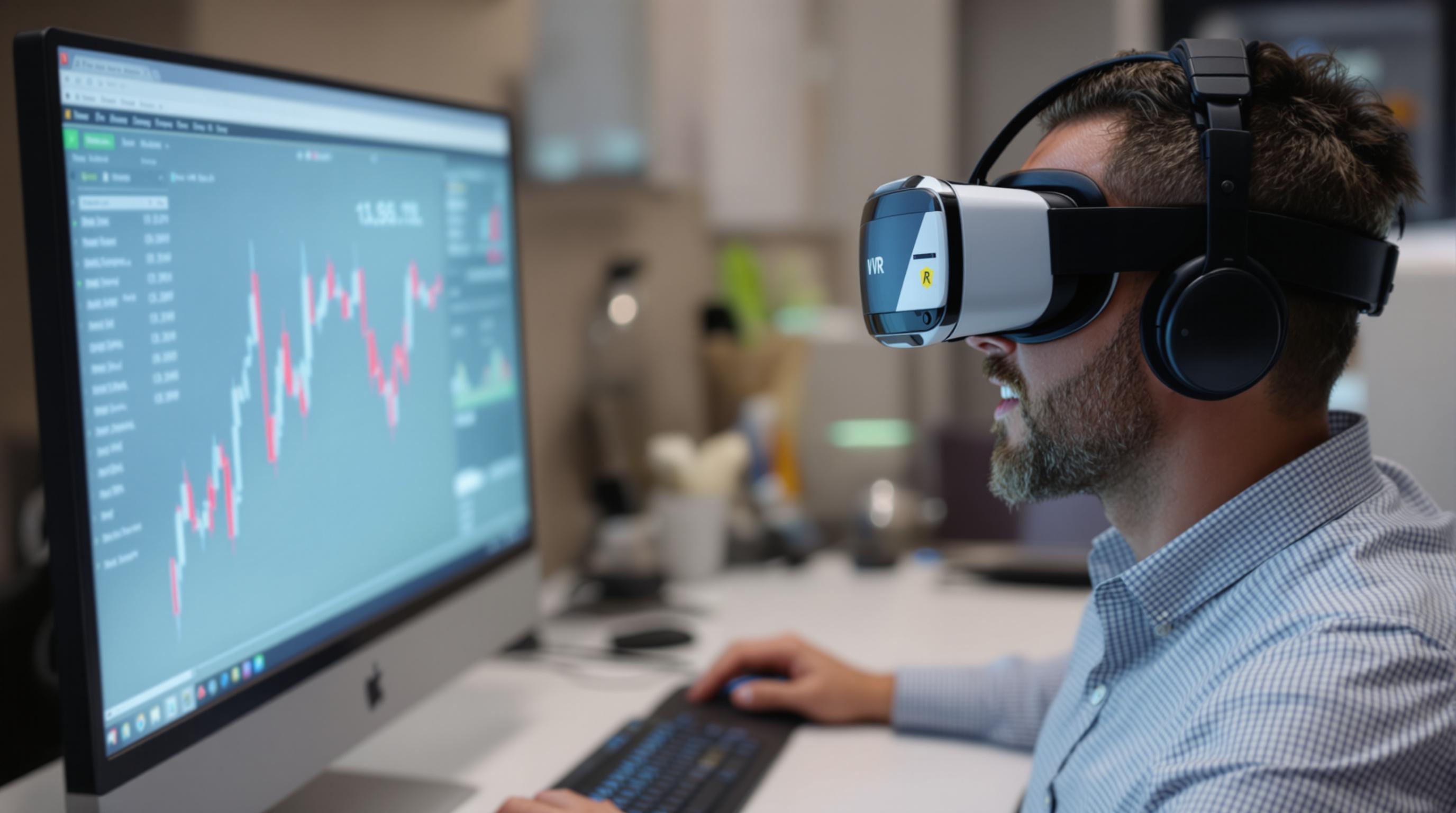
The Uncharted Waters: How Virtual Reality is Transforming Trader Training in the Forex Market
The Uncharted Waters: How Virtual Reality is Transforming Trader Training in the Forex Market
The integration of Virtual Reality (VR) into trader training is unveiling new horizons in the Forex market. As the complexity of currency trading escalates, innovative techniques like VR are empowering traders with immersive experiences that improve their understanding and skill sets.
The Dawn of a New Era in Forex Trading
In the past few decades, the Forex market has become increasingly sophisticated, drawing millions of traders worldwide. Gone are the days when traders would anxiously stare at charts, squinting to make sense of the oscillating lines and candlestick patterns. A VR headset now enables them to step into a digital trading floor, where they can interact with the environment and make better-informed decisions.
The Psychology of Trading: A New Lens Through VR
One of the unexplored facets of trading is the significant psychological impact it can have on traders. Studies suggest that emotional factors play a substantial role in trading decisions. For instance, a 2018 report by the CFA Institute mentioned that about 70% of traders' losses were attributable to emotional biases (CFA Institute, 2018). By placing traders within a virtual arena, VR can help them simulate high-stress situations, learn how to manage their emotions, and make rational decisions under pressure.
Case Study: The VR Trading Simulator of 2023
Let’s turn our attention to an innovative VR trading simulator launched in early 2023, known as ForexVR. Combining real-time analytics with immersive scenarios, it allows users to practice trading without the risk associated with real investments. In a study conducted over six months, users reported a 40% increase in their trading accuracy after only 30 hours of using the platform. "It's as if I’m in the trading pit with seasoned pros,” commented a user in their twenties. The simulator facilitates the development of essential skills such as strategic planning and quick decision-making. This level of engagement is what sets VR apart from traditional training methods.
Statistics That Speak Volumes
In an ever-evolving technological landscape, it’s important to back up our claims with data. According to a report from Statista, in 2021, the global VR market was valued at approximately $15 billion and is projected to reach $57 billion by 2027 (Statista, 2021). The increase in accessibility to VR technology is paving the way for its incorporation into various sectors—trading being one of the most critical. By 2025, it is expected that the adoption rate for VR in finance will exceed 50%, indicating a seismic shift in how financial education is delivered.
How VR Addresses Common Trader Pitfalls
Forex trading, often called the “Wild West” of finance, presents numerous pitfalls ranging from overtrading to lack of discipline. With VR, traders can replicate situations that lead to such issues. For example, they can step into a virtual environment where they must make split-second trading decisions amidst fluctuating market conditions. This practice leads to better time management and strategic thinking skills. As Evan H., a 32-year-old trader, put it, “VR has changed how I think about trading altogether. My fear of making a mistake has vanished.”
The Future of Trader Training: A Playful Odyssey
Imagine slipping on a VR headset and entering a vibrant world of Forex trading, where you're greeted by animated characters who guide you through scenarios reminiscent of popular video games. It seems almost whimsical, yet this avant-garde approach is turning learning into an adventure. With gamification elements, users can earn 'badges' for various achievements, leading to enhanced motivation and engagement in their training.
Bridging the Gap Between Knowledge and Practice
Learning about trading concepts without practical application often leads to gaps in knowledge retention. VR offers a seamless bridge between learning and execution. For instance, while training, users can practice using advanced indicators, analyze their strategies in real-time, and collect data on their performance—all features that traditional platforms struggle to offer. By making trading more tangible, VR reduces intimidation and enhances participation.
A Cautionary Tale
However, like the infamous Icarus, there are dangers of flying too close to the sun when it comes to VR-based trader training. Over-dependence on virtual simulations might lead some traders to neglect the fundamentals of market analysis. In 2022, a group of novice traders relied exclusively on VR simulations, resulting in spectacular losses when faced with real-market trading without proper preparation. “Virtual reality was so immersive, but I forgot the basics,” remarked one devastated trader. This highlights the necessity of combining VR training with traditional education methods for comprehensive learning.
Connecting Generations: A Timeless Learning Tool
The digital generation, growing up with technology, embraces VR training. Yet, what of the seasoned traders, those who have weathered many market storms yet shy away from new technology? The innovative training programs have seen encouraging responses from older traders. As Arthur, a 68-year-old trader, noted, “I thought VR was just for kids, but it has actually helped me visualize market trends better.” Bridging generational gaps is just another gift technology offers, enhancing collaboration between different age groups.
Conclusion: Navigating Future Waters Together
As we sail deeper into the 21st century, the realm of Forex trading will likely witness exponential growth facilitated by ingenious technologies such as VR. Trader training is no longer limited to dreary textbooks and plain spreadsheets but has transformed into a bustling realm where reality enhances learning. By integrating VR into training programs, we are on the cusp of a revolution that promises to redefine the landscape of Forex trading for traders both young and old. The future looks bright for those ready to embrace these uncharted waters!