Related Articles
- The Influence of Urban Legends: How Folklore Shapes Investor Behavior in Today's Financial Landscape
- The Role of Personal Narratives: How Your Story Shapes Investment Choices and Risk Tolerance
- The Ripple Effect: How Social Media Influencers Steer Investor Sentiment in Unexpected Ways
- Beneath the Surface: Investigating the Silent Influence of Underground Economies on Legitimate Market Trends
- Navigating the Bizarre: The Influence of Esotericism on Modern Investment Strategies and Market Speculation
- Rethinking Risk: The Surprising Link Between Urban Architecture and Financial Instability in Emerging Markets
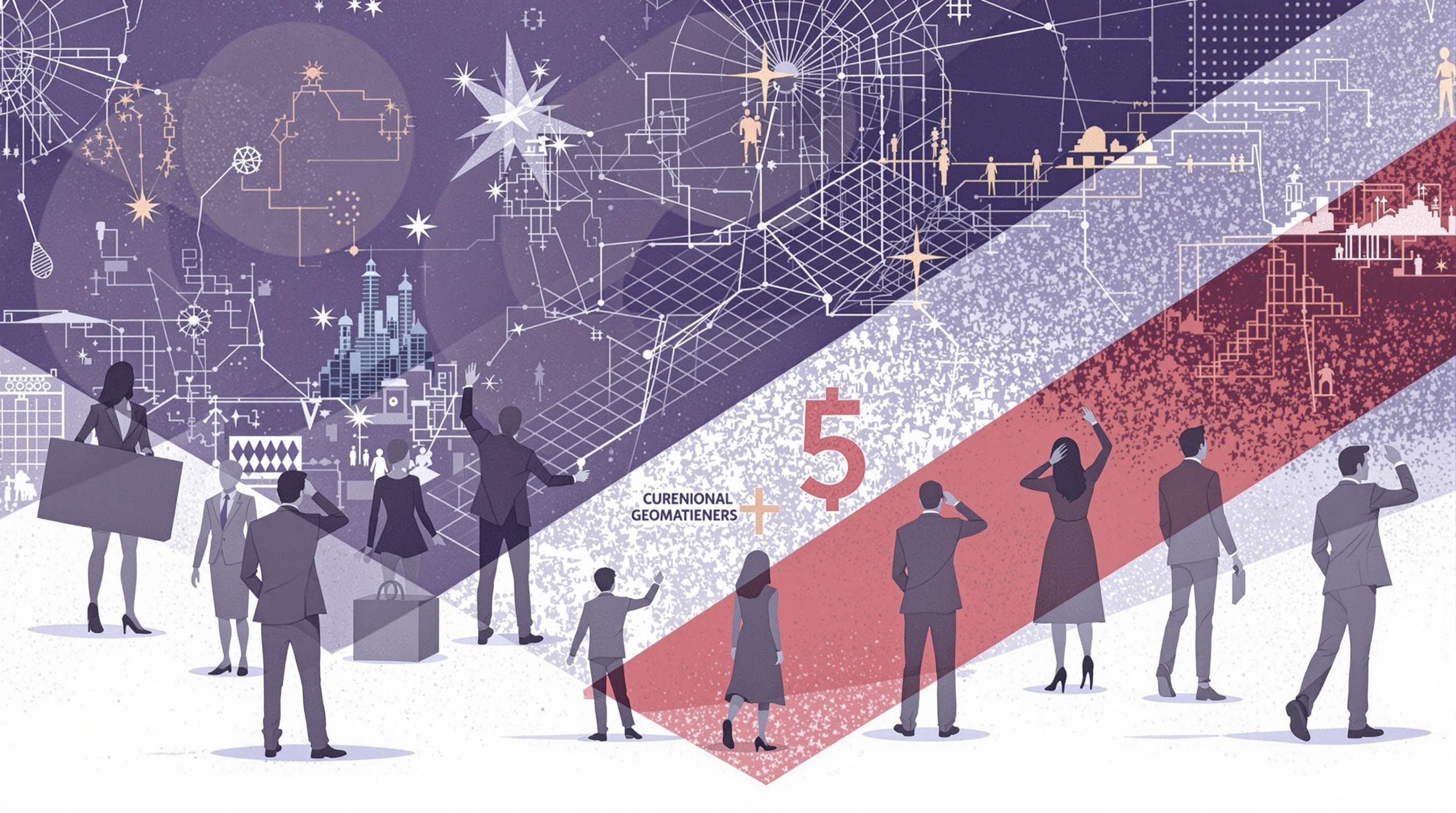
Unseen Forces: The Impact of Geopolitical Events on Currency Values and Trading Approaches
Unseen Forces: The Impact of Geopolitical Events on Currency Values and Trading Approaches
The intricacies of currency values are often influenced by unseen geopolitical events, shaping the landscape of international markets in profound ways. Navigating these complexities requires a keen understanding of geopolitics and innovative trading strategies that can adapt to rapid changes in the global economic environment.
The Weight of Geopolitical Events
Geopolitical events can range from conflicts, elections, and international treaties to economic sanctions and diplomatic relations. In the realm of forex trading, these events can act like heavyweights in a boxing ring, delivering punches that send currency values tumbling or soaring. Just ask those who traded during the Brexit referendum, which caused the British pound to plummet by approximately 10% in one day (Reuters, 2016). This illustrates how a single event can echo through the corridors of global finance.
A Currency’s Personality
Believe it or not, currencies can exhibit their own personalities based on geopolitical context. For instance, the Swiss Franc (CHF) is often viewed as a 'safe haven' currency. During times of turmoil, investors flock to it, driving up its value. On the other hand, emerging market currencies, like the Turkish Lira, can be highly volatile, influenced heavily by political instability and economic policies enacted by their governments. This variance can make them both risky and rewarding.
In the Trenches: A Trader's Narrative
Let’s zoom into the life of a hypothetical trader named Jess, a 29-year-old forex enthusiast based in London. Jess started trading in 2015 and innocently believed that technical analysis alone would lead her to riches. However, she quickly learned the hard way during the 2016 U.S. presidential election, where the unpredictability of market reactions left no room for her charts and graphs. She witnessed how Donald Trump’s victory rattled the markets, sending the Mexican Peso down over 10% against the dollar as investors anticipated adverse consequences for trade (Bloomberg, 2016).
When Life Hands You Lemons
One could jokingly say that trading during geopolitical upheaval is akin to attending a wedding where you don’t know the bride or the groom—awkward yet thrilling! Market volatility can be terrifying, but there’s humor in the chaos. Picture traders glued to their screens, popcorn at their sides, watching as world events unfold like a dramatic reality show: “As the World Turns: Currency Edition.” If the U.S. high-stakes negotiations with Iran take a sudden turn, traders react faster than a chef can say “flambé!”
A Historical Prelude
History is a powerful teacher when it comes to understanding the interaction between geopolitics and currency values. Take the Russian Ruble, for instance. In 1998, the Ruble collapsed following a debt crisis, largely caused by political uncertainty and a plummeting oil market. The result was devastating, with the currency losing around 70% of its value almost overnight (World Bank, 1999). This not only impacted Russia but also sent shockwaves through the global economy, showcasing how interconnected these events are.
The Importance of Staying Informed
So, how can traders like Jess learn from the past and brace themselves for the future? The key lies in stringent information gathering. It is essential for traders to become geopolitical analysts, often following credible news sources like The Economist, Bloomberg, and Financial Times, and engaging in discussions with fellow traders to grasp how external factors influence currency values.
Utilizing Statistical Data
Arming oneself with statistics and analyses can empower traders to make informed decisions. For instance, studies show that 90% of traders are influenced by breaking news, but only 30% have a system for reacting (Forex Factory, 2022). This key information could be the difference between a profitable trade and a devastating loss. Knowing when to enter or exit a trade based on geopolitical events invokes a blend of art and science.
Strategies for Success
Let’s break down some clever strategies that intertwine forex trading with geopolitics. First, consider the 'News Trading' strategy, where traders enter or exit trades based on real-time news events. An example is how traders positioned themselves before the signing of the Trade Agreement between China and the U.S. in early 2020. This event was a precursor for a significant strengthening of the Chinese Yuan (CNY) as it signaled a potential end to the trade war.
The Art of Forex Hedging
Another effective method is hedging, which can act as insurance against adverse moves linked to geopolitical events. Suppose tensions escalate in Eastern Europe; a trader might hedge investments in related currencies to mitigate risk. For example, during the Ukraine crisis in 2014, traders who hedged their investments in the Euro benefited significantly as currencies became more sensitive to regional stability (Reuters, 2014).
The Evolution of Currency Markets
Making predictions based solely on history may sound like a shot in the dark. However, we live in a world perpetually affected by change. As we look ahead, the unprecedented rise of digital currencies aligns with the realities of global geopolitics. Blockchain technology and decentralized finance (DeFi) continually reshape our understanding of currency, creating both opportunities and challenges for traders. This is indeed the dawn of a new era!
Education is Your Best Friend
For our youthful readers, inspiration can often spring from educational resources available at our fingertip. Free webinars, forex education platforms, and online trading communities are phenomenal ways for budding traders to gain insights. Social media platforms like Twitter can also offer ‘live’ updates and diverse viewpoints, illuminating the often murky waters of international finance.
The Call for Emotional Intelligence
Moreover, never underestimate the power of emotional intelligence in trading. While the technical side is vital, understanding the emotional landscape around geopolitical events is equally crucial. Markets are often driven by fear and greed, and the ability to read market sentiment can be the edge you need. Hence, becoming proficient in both analysis and emotions will greatly enhance trading success.
The Bigger Picture
A hundred years from now, it’s likely that we’ll look back on our current trading habits and marvel at our limited perspectives. The rise of AI in market predictions and automated trading is transforming how we perceive market data, enabling traders to analyze vast amounts of information faster than a human mind could ever manage. Geopolitics will always play a role, but with a little dose of advanced technology, perhaps we can predict these unseen forces more accurately.
Conclusion: Adaptability is Key
In this whirlwind of geopolitics and currency trading, flexibility remains a trader’s best companion. Embrace the chaos, learn from the past, and keep your finger on the pulse of world events. Whether you are 16, like a bright-eyed beginner eager to conquer the markets, or 70, bringing wisdom from decades of experience, the essence remains the same: adaptability and continuous learning are the cornerstones of success in this unpredictable landscape. So gear up, stay informed, and let the unseen forces captivate you on this thrilling journey of trading.
As we prepare for what the future holds, remember, the world needs more informed traders navigating these waters. Just imagine the thrill of emerging from the tide of uncertainty, riding the waves of change with skill and knowledge—now that’s a ride worth taking!